Tea Master
How to cold brew tea
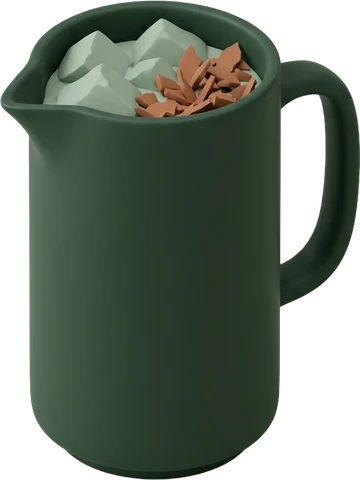
To cold brew tea, use 1.1–1.5 g of loose leaf per 100 ml of cold water, which is 11–15 g per litre (about 34 fl oz), and leave it in the fridge at about 4 °C (39 °F). Japanese greens need 4 hours, Chinese greens 5–6, white teas 6–8 and herbal blends 8. Then strain out the leaves and keep the tea cold.
Cold brew tea chart: grams and hours
| Tea | Leaf per 100 ml | Per litre (34 fl oz) | Time in the fridge |
|---|---|---|---|
| Sencha | 1.3 g | 13 g | 4 h |
| Gyokuro | 1.5 g | 15 g | 4 h |
| Longjing, Bi Luo Chun | 1.1 g | 11 g | 5 h |
| Mao Feng | 1.1 g | 11 g | 6 h |
| Gunpowder | 1.2 g | 12 g | 6 h |
| Hojicha, Genmaicha | 1.3 g | 13 g | 6 h |
| Silver Needle, White Peony, Moonlight White | 1.2 g | 12 g | 6 h |
| Shou Mei | 1.3 g | 13 g | 8 h |
| Hibiscus | 1.5 g | 15 g | 8 h |
| Chamomile, peppermint, lemongrass | 1.4 g | 14 g | 8 h |
All at fridge temperature, about 4 °C (39 °F). That is close to a western hot-brew dose and about a fifth of a gongfu dose, but it works over hours instead of minutes.
How to cold brew tea, step by step
- Weigh the leaf. Multiply the jar volume by the ratio: a 1 litre jar of sencha takes 13 g, a 750 ml bottle of White Peony takes 9 g. A scale beats spoons here, because leaf shapes weigh very differently; see how much tea per cup.
- Use cold, good water. Filtered or fresh tap water that tastes good on its own. Cold brew has no heat to mask off flavours.
- Combine leaf and water in a jar, pitcher or cold brew bottle with a filter. Stir or swirl once so all the leaves get wet.
- Refrigerate. Close the lid and put it in the fridge for the time in the chart.
- Strain. Pour through a fine strainer or lift out the filter. Leaving the leaves in makes the tea heavier and more astringent over time.
- Keep it cold and drink it within a day or two, while it tastes fresh.
Start a jar before bed and it is ready by breakfast for herbal and white teas, or brew Japanese greens in the morning for the afternoon.
Which teas work best cold
- Japanese greens (sencha, gyokuro): the classic. Cold water pulls out sweetness and savoury umami with very little bitterness, and they are ready in 4 hours.
- Chinese greens (Longjing, Bi Luo Chun, Mao Feng): nutty, floral and soft in 5–6 hours.
- White teas: honeyed and smooth; Shou Mei gets fruity over 8 hours. More in how to brew white tea.
- Roasted teas (hojicha, genmaicha): toasty and rounded, good with food.
- Herbal blends: hibiscus turns vivid red and tart, peppermint crisp, chamomile soft. They need the longest time, 8 hours.
- Oolong and black tea also work. Floral rolled oolongs are especially good cold. A common starting point is an overnight steep, then adjust by taste.
Cold brew vs hot brewed iced tea
Cold water extracts flavour slowly and pulls out fewer of the bitter, astringent compounds that hot water releases quickly. The result is smoother, sweeter and harder to ruin: a few extra minutes or even an extra hour changes little. The cost is time, and the aroma is quieter than in a hot cup.
Hot brewed iced tea is faster. Brew a double-strength pot, then pour it over a glass full of ice; the melting ice brings it back to normal strength. It has more aroma, more body and more bite.
A middle way is the hot bloom: pour a little hot water over the leaves for 30–60 seconds, then top up with cold water and refrigerate. It brings out more aroma while keeping the cold brew smoothness.
Cold brew tea bags and other variations
- Tea bags: most bags hold 2–3 g, so use roughly one bag per 150–250 ml (5–8 fl oz) of water, a bit more than for hot tea. Bags with broken leaf extract faster; taste after 3–4 hours.
- Big batches: keep the same grams per 100 ml. Doubling the water doubles the leaf; the time stays the same.
- Stronger tea: add leaf rather than hours. Past the chart time most teas get heavier, not more flavourful.
- Cold brew in milk: some people steep hojicha or black tea directly in cold milk overnight. Use the same ratio, keep it in the fridge and drink it the next day.
- Fruit and herbs: add citrus peel, mint or ginger at the start, or berries for the last hour.
- Sun tea: leaving a jar in the sun keeps the water in a lukewarm range for hours. The fridge is the safer choice.
Common cold brew mistakes
- Hot-tea ratio. 1 g per 100 ml of a delicate white tea can taste thin cold. Stay at 1.1–1.5 g.
- Leaving the leaves in for days. Strain once the time is up.
- Room temperature. Brew in the fridge, not on the counter.
- Hard or chlorinated water. It tastes flat or chemical without heat to hide it. Filter it.
- Crushed leaf in a fine mesh. Dust slips through and clouds the tea. Use whole leaf, or double the filter.