Tea Master
How to brew sencha and other Japanese green teas
Brew sencha at 75 °C (167 °F) with 3.3 g of leaf per 100 ml in a kyusu: 60 seconds for the first steep, 30 for the second, 45 for the third. In a mug, use 2.5 g per 100 ml for 30–60 seconds. Gyokuro wants much cooler water, 55 °C (131 °F) for 2 minutes, while roasted hojicha takes 90–92 °C and only 15–60 seconds. Pour out every last drop after each steep.
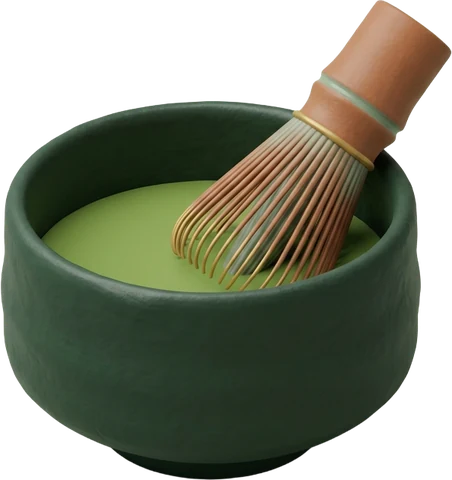
Japanese tea brewing chart
| Tea | Kyusu: water, leaf per 100 ml, steeps | Mug: water, leaf per 100 ml, time | Cold brew |
|---|---|---|---|
| Sencha | 75 °C (167 °F), 3.3 g: 60, 30, 45 s | 75 °C, 2.5 g, 30–60 s | 1.3 g, 4 h |
| Gyokuro | 55 °C (131 °F), 7 g: 120, 30, 60 s | 55 °C, 3.3 g, 2 min | 1.5 g, 4 h |
| Hojicha | 92 °C (198 °F), 3.5 g: 15, 30, 45 s | 90 °C (194 °F), 2 g, 30–60 s | 1.3 g, 6 h |
| Genmaicha | 90 °C (194 °F), 3.5 g: 30, 45, 60 s | 85 °C (185 °F), 2 g, 1 min | 1.3 g, 6 h |
Japanese green tea is never rinsed. The first steep is the one you want to drink. A 250 ml (8 oz) kyusu of sencha takes about 8 g of leaf, roughly two heaped teaspoons.
How to brew sencha in a kyusu
- Boil fresh, soft water and let it cool to 75 °C (167 °F). The pouring trick below works well.
- Put 3.3 g of sencha per 100 ml of your kyusu into the pot. Japanese leaf is fine and needle-shaped, so weigh it if you can.
- Pour in the water and close the lid. Do not stir or shake the pot.
- Wait 60 seconds for the first steep.
- Pour into the cups little by little, going back and forth between them, so each cup gets the same strength.
- Shake out the final drops. The last drops are the strongest and sweetest, and water left behind keeps stewing the leaf.
- Second steep: slightly hotter water and only 30 seconds. Third steep: 45 seconds.
After three steeps, sencha is mostly spent. If you like, open the lid between steeps so the wet leaves do not cook in their own heat.
Why the first steep is long and the second is short
The Japanese steep order looks odd next to Chinese tea, where every steep gets longer. It makes sense once you look at the leaf. Sencha is steamed and rolled into tight needles. During the first steep they need time to soak up water and open, so 60 seconds gives a gentle, sweet cup.
By the second steep the leaves are already open and soft, so flavour comes out fast. Thirty seconds is enough, and a little more heat is fine. By the third steep much of the flavour is gone, so the time goes up again, to 45 seconds.
Low temperature matters as much as time. Cool water draws out the savoury, brothy taste called umami and holds back the bitter compounds. That is why sencha brewed with boiling water tastes harsh and flat. More on this in the water temperature chart.
How to cool the water without a thermometer
The traditional way is to cool water by pouring it between vessels. Each transfer into a room-temperature cup or pot drops the water roughly 5–10 °C, depending on the vessel and how fast you pour.
- Pour just-boiled water into the empty cups. This also warms them.
- Pour the water from the cups into the kyusu, or into a cooling bowl (yuzamashi) first.
- Pour it onto the leaves.
Two or three transfers bring boiling water close to sencha temperature, and you know exactly how much water fills your cups. Gyokuro needs more: several transfers or a few minutes of waiting in an open bowl. Treat these as rough figures. If the tea is bitter, cool it more next time.
How to brew gyokuro
Gyokuro is shaded for several weeks before picking, which makes it rich in umami. Hot water wastes that. Our recipe:
- Water: 55 °C (131 °F). Water at 60 °C (140 °F) still works.
- Leaf: 7 g per 100 ml. For a small 60 ml pot that is about 4 g.
- Steeps: 120 seconds, then 30, then 60.
Use a small pot or a shiboridashi and small cups: gyokuro is sipped like a concentrated broth, a few spoonfuls per cup. In a mug, use 3.3 g per 100 ml at 55 °C for 2 minutes. After the last steep, the soft leaves are edible with a drop of soy sauce or ponzu.
Hojicha and genmaicha: hotter water, short steeps
Hojicha is green tea roasted until brown. Roasting removes most of the grassy taste and the risk of bitterness, so it takes hot water: 92 °C (198 °F) in a kyusu with 3.5 g per 100 ml and steeps of 15, 30 and 45 seconds. In a mug, use 2 g per 100 ml at 90 °C for 30–60 seconds. It is a good evening tea and very forgiving.
Genmaicha is green tea mixed with toasted rice. The rice likes heat, but the green leaf still burns, so stay at 85–90 °C. In a kyusu: 3.5 g per 100 ml at 90 °C for 30, 45 and 60 seconds. In a mug: 2 g per 100 ml at 85 °C for 1 minute.
Powdered tea is a different method altogether: whisked, not steeped. See how to make matcha.
Sencha in a mug, tea bags and cold brew
- Mug or Western teapot: 2.5 g per 100 ml at 75 °C for 30–60 seconds, then lift the infuser out. A fine mesh basket matters, because sencha leaves break into small pieces and slip through coarse filters.
- Tea bags: same 75 °C, 30–60 seconds. Bags hold broken leaf, which extracts faster, so stay at the short end.
- Cold brew: 1.3 g of sencha per 100 ml of cold water, 4 hours in the fridge, then strain. Gyokuro: 1.5 g for 4 hours. Hojicha and genmaicha: 1.3 g for 6 hours. Cold water brings out sweetness with almost no bitterness. See cold brew tea.
For Chinese green teas, which need hotter water and longer steeps, see how to brew green tea.