Tea Master
How to make matcha at home
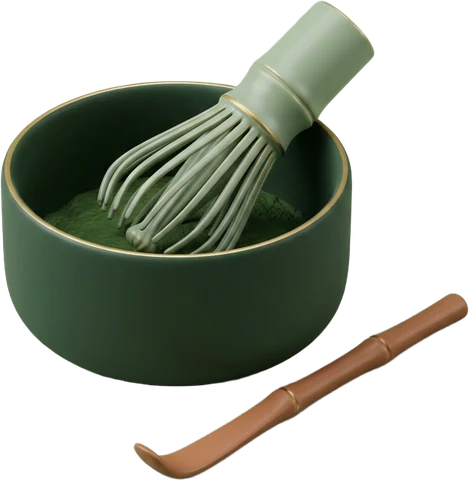
To make matcha, sift 2 g of powder (about one level teaspoon) into a bowl, add 20 ml of water at 75 °C (167 °F) and stir it into a smooth paste. Pour in another 50–60 ml of water and whisk briskly in a W or M motion for 20–30 seconds, until a fine foam covers the top. No whisk? Shake the same amounts in a sealed jar.
Matcha in numbers
| What | Amount |
|---|---|
| Matcha powder | 2 g (about 1 level teaspoon) |
| Water temperature | 75 °C (167 °F); 70–80 °C (158–176 °F) works |
| Water for the paste | 20 ml (0.7 fl oz) |
| Water in total | about 70 ml (2.4 fl oz) |
| Whisking | 20–30 s, W or M motion |
| Result | one bowl of usucha (thin matcha) |
Boiling water makes matcha bitter and flattens its sweetness. If you have no thermometer, let freshly boiled water sit for about five minutes, or pour it into a cool cup first and then into the bowl. More tricks are in the tea water temperature chart.
How to make matcha with a bamboo whisk, step by step
- Soak the whisk. Stand the chasen in warm water for a minute. Soft tines bend instead of breaking, and the bowl warms up at the same time. Empty and dry the bowl.
- Sift the powder. Push 2 g through a small fine sieve into the bowl. Matcha clumps from static and moisture, and lumps do not whisk out.
- Make a paste. Add 20 ml of water at 75 °C (167 °F) and stir slowly with the whisk until smooth and glossy, with no dry spots.
- Add the rest of the water, another 50–60 ml.
- Whisk fast from the wrist in a W or M shape, not in circles. Keep the tines just off the bottom of the bowl. After 20–30 seconds you should have a fine, even foam.
- Finish the foam. Slow down, move the whisk to the surface and break any large bubbles. Lift the whisk out from the centre.
- Drink right away. The powder settles within minutes.
How to make matcha without a whisk
- Jar or bottle. Put 2 g of sifted matcha and 70 ml of water at 75 °C (167 °F) in a small jar, close it tightly and shake hard for 15–20 seconds. Hold the lid with a towel, since hot liquid builds a little pressure. You get a decent foam; this is also the easiest way to make iced matcha with cold water.
- Milk frother. A handheld battery frother makes a quick paste and a good foam in 10–15 seconds. Hold the head below the surface at first to avoid splashing.
- Small kitchen whisk or fork. Make the paste with very little water first and stir hard. The foam will be coarser, but it will be smooth.
- Blender. Good for lattes and larger amounts. A few seconds is enough.
The paste step matters more than the tool. Lumps form when the powder meets a lot of water at once.
Usucha and koicha: thin and thick matcha
Usucha is the everyday bowl described above: 2 g of matcha in about 70 ml of water, whisked to a light foam. Most matcha sold for drinking is meant for this.
Koicha is thick matcha used in the tea ceremony. It is commonly made with about twice the powder or more in half the water, kneaded slowly into a smooth, glossy paste with no foam. It needs the highest grades, since any bitterness is concentrated. If you are starting out, stick with usucha.
Matcha latte, hot and iced
Make the matcha shot first: whisk or shake 2 g with about 30–40 ml of water at 75 °C (167 °F) until smooth. Then add 150–200 ml (5–7 fl oz) of milk.
- Hot latte: warm and froth the milk, pour it over the shot.
- Iced latte: fill a glass with ice and cold milk, then pour the shot on top. Shaking the shot with a little cold water in a jar works too.
- Stronger taste: use more powder rather than less milk, for example 3–4 g in a large latte.
- Sweetener: stir it into the shot while it is warm, so it dissolves.
Cheaper culinary grade matcha is fine in lattes, where milk covers some bitterness. Keep the bright green ceremonial grades for plain usucha.
Common matcha mistakes
- Boiling water. It scorches the flavour. Stay at 70–80 °C (158–176 °F).
- Skipping the sieve. The lumps stay in the bowl and taste chalky.
- Whisking in circles. It stirs but barely foams. Use a quick zigzag.
- Too much water. A full mug of water makes thin, sad matcha. Keep it near 70 ml for 2 g.
- Old matcha. Opened matcha fades and turns dull and bitter within weeks. Keep it sealed, cool and dark; many people store opened tins in the fridge, letting them reach room temperature before opening to avoid condensation.
- Brown or yellow powder. Good matcha is vivid green. A dull colour usually means a low grade or old stock.